People ask for a good SEO score as if it were a pass mark. It is not. A SiteScore letter is a band on a 0 to 100 score built from fixed checks. The same pages, scanned with the same modules, produce the same score. Nothing in that number is a language model's opinion, and nothing in it is a promise about where you will rank next week.
A letter is a band, not a verdict
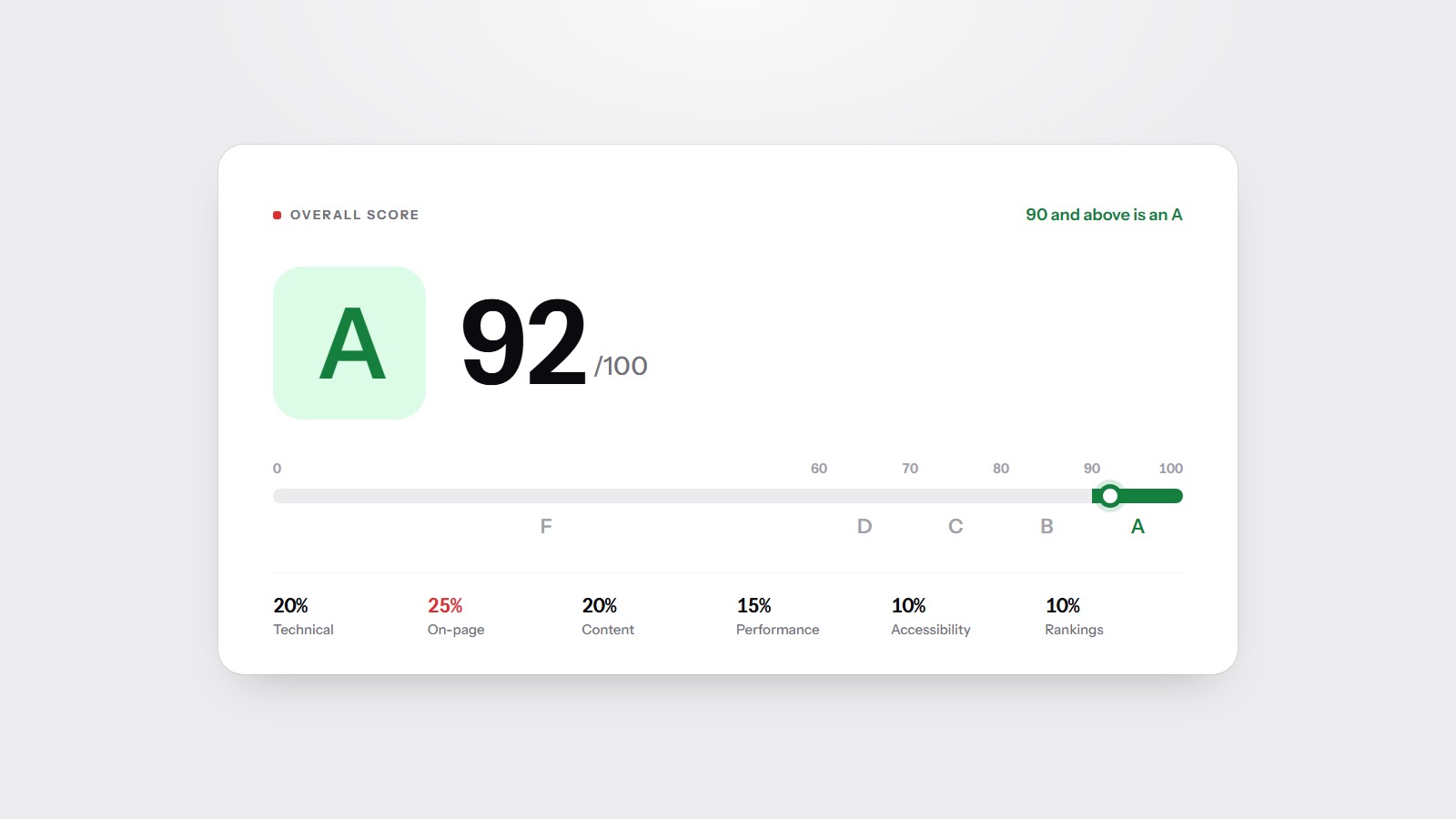
The bands are fixed. 90 and above is an A. 80 to 89 is a B. 70 to 79 is a C. 60 to 69 is a D. Anything under 60 is an F. A site at 79 and a site at 80 are one point apart and a whole letter apart. Treat the letter as a label you can explain, and the number underneath it as the thing you actually move.
An A does not mean every page is perfect. It means the weighted checks, on the pages that were scanned, landed in the top band. An F usually means something structural is wrong: pages failing to load, a robots.txt that blocks everyone, or titles and content that are missing on a large share of the crawl. The grade reason on the report says which of those it was.
Where the number comes from
The overall score is a weighted average of six categories. Each one is scored from 0 to 100, then combined:
- Technical, 20 percent. Can a crawler fetch the site: errors, sitemap, robots.txt, broken links.
- On-page, 25 percent. Titles, meta descriptions, headings, canonicals, and related markup.
- Content, 20 percent. Whether indexable pages have enough readable text. Under 300 words counts as thin.
- Performance, 15 percent. A simple HTTP probe, Lighthouse lab data, and Chrome UX Report field data when they are available.
- Accessibility, 10 percent. The Lighthouse accessibility score, when PageSpeed Insights data is available.
- Rankings, 10 percent. How your target keywords place in Google results, when that module is run.
On-page carries the most weight because missing and duplicate titles are common and they are the words a search result actually shows. Rankings carry the least because a position check only means something once you have named the keywords you care about. The full list of checks, and the points each one costs, is on the methodology page. That page is generated from the scoring code, so it cannot drift from the scanner.
Why a category you did not run scores 75
A free homepage scan does not run every module. Rankings need keywords. Performance needs a PageSpeed Insights key on our side. When a module was not part of the scan, that category is set to 75 and labelled not measured. 75 sits in the middle of the C band. It is a neutral score: skipping a module neither helps the overall grade nor hurts it.
If your report says a category was not measured, do not try to 'fix' the 75. Run that module, or ignore the category until you do. The letter only moves when a measured check changes.
This is also why two scans of the same site can show the same letter with different detail. A homepage-only scan and a full crawl are measuring different sets of pages. Compare scans that used the same modules. Each report records the methodology version it was scored with, currently 2026.10.1, so an older report stays readable after the weights change.
The AI-search grade sits beside the letter
AI-search readiness is a second grade. It does not change the overall score. It answers a different question: can answer engines fetch the page, is there an llms.txt file, does the homepage say who runs the site in schema, is the main text in the HTML without JavaScript, and is the HTML structured with a main element, one H1, and a language.
A strong letter and a weak AI-search grade can sit on the same site. A brochure that is fast and well titled can still hide its content behind a script, or block the crawlers that fetch pages for ChatGPT, Perplexity, and Claude. That second grade is explained in what those systems can actually see.
What to do with the letter
Do not chase an A for its own sake. Move the checks that stop a page being fetched, indexed, or clicked. A missing title costs more than a title that is a few characters over the line. A robots.txt that blocks every crawler matters more than a missing favicon. How to read the report walks through that order.
When you want the number for your own homepage, the free scan takes about a minute and does not need an account. It returns the letter, the category scores, and the top issues. The methodology page is there if someone asks you to explain the grade.