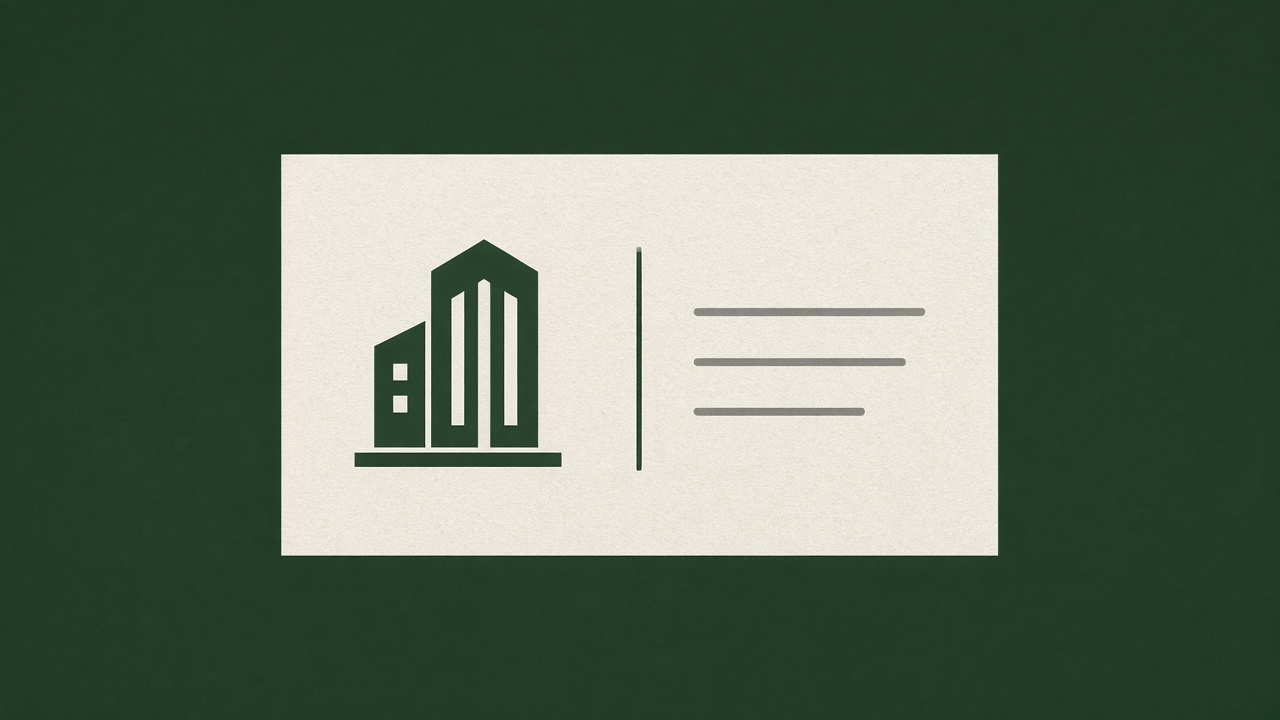
Schema is a block of structured data, usually JSON-LD, in the page. It names things a paragraph only implies: this is the business, this is the logo, this is the phone, these are the profiles. People do not read it. Systems that want a clear identity do.
Name the business, then the details
Start with the type and the name. Organization is the general choice. LocalBusiness fits a shop, a clinic, or a studio with a place and a phone. The name should match the name on the page, not a keyword phrase. The logo should be a real logo URL. sameAs is the list of official profiles, such as your maps listing or your company page, not a pile of directories you do not control.
Add address and telephone when they are real and you want them public. Do not invent a street to look complete. Do not copy a competitor's markup. If the visible page says one phone number and the schema says another, fix it. Agreement is the point.
It does not move the letter
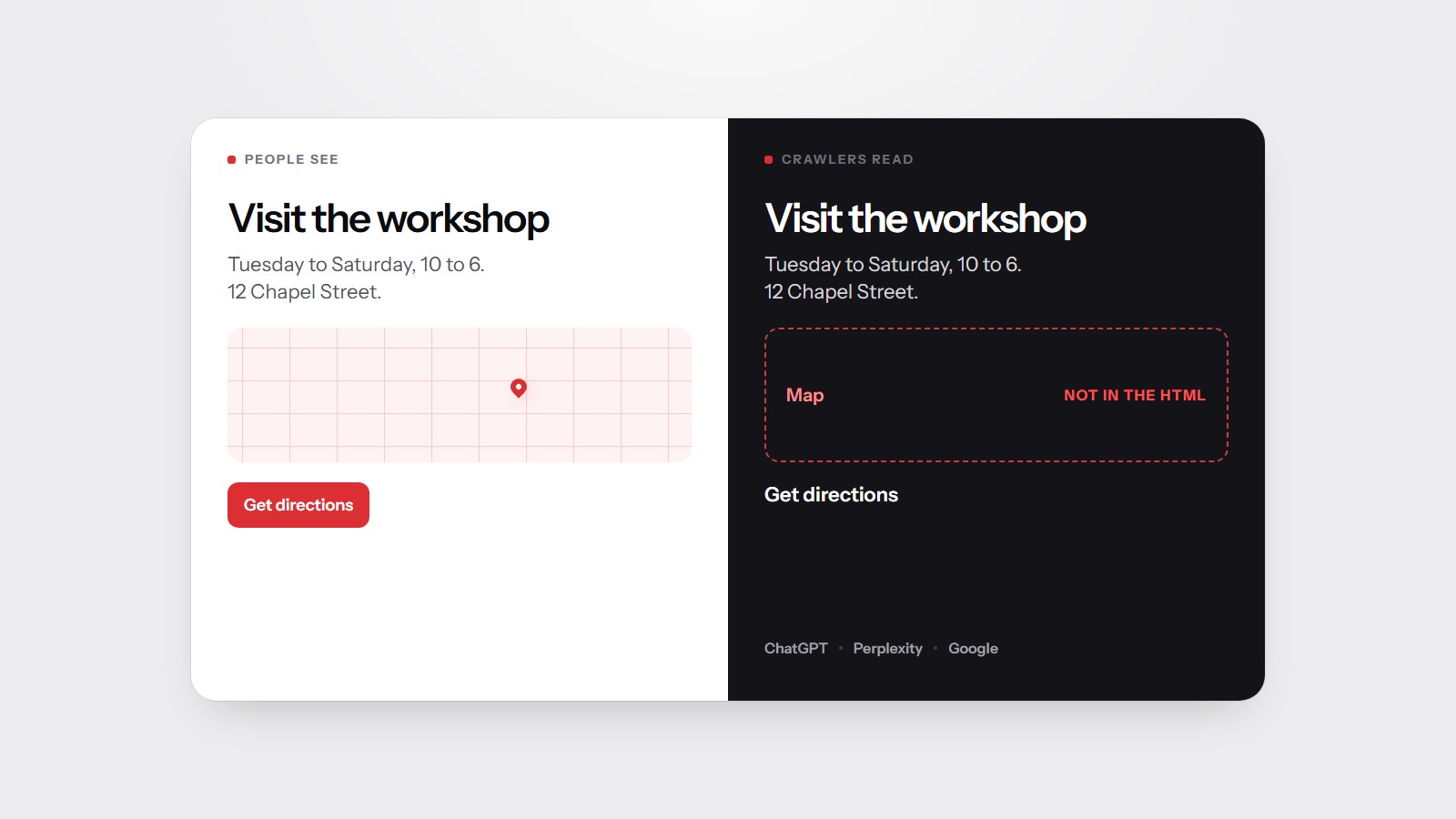
Identity schema is part of the AI-search sub-grade, not the overall score. That sub-grade asks whether answer engines can tell who runs the site. It is worth 20 of the points in that separate grade. A strong letter and a weak AI-search grade can sit together. What those systems can see explains the rest of that grade, including llms.txt and content that is only painted by JavaScript.
- One type: Organization or LocalBusiness, not both fighting.
- The legal or trading name, matching the page.
- A logo URL that loads.
- sameAs only for profiles that are actually yours.
- Address and phone only if they are true.
Schema does not replace sentences on the page. If the HTML does not say who you are, a hidden block will not carry the page.
Put the block on the homepage, once. Inner pages can point at it. Repeating a slightly different Organization block on every URL is how names and phone numbers drift apart. After you publish it, compare three things: the name in the schema, the name in the header, and the name on the profile you listed in sameAs. If a person cannot tell they are the same business, a parser will not do better. Leave out any field you are not willing to keep up to date. A short, true block is better than a long one that drifts.
Where to read the result
The AI-search grade is reported beside the letter. It does not change the letter. The points, including identity schema, are on the methodology page. What the letter means keeps the two numbers apart on purpose.
The free scan checks the homepage for that markup. If it finds a type but misses sameAs or a logo, the note will say what is missing. Add the missing field. Do not add a second, conflicting block.