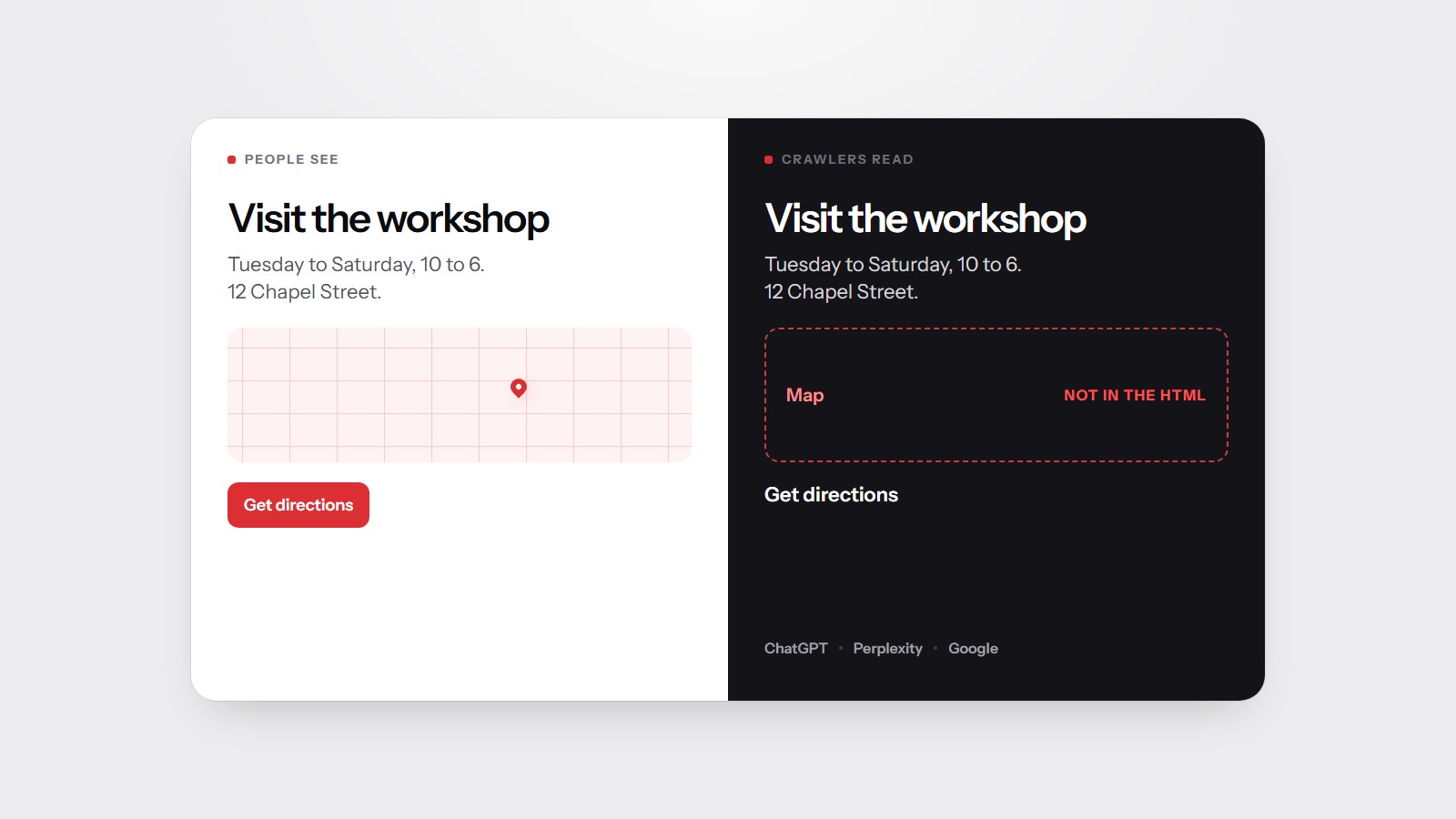
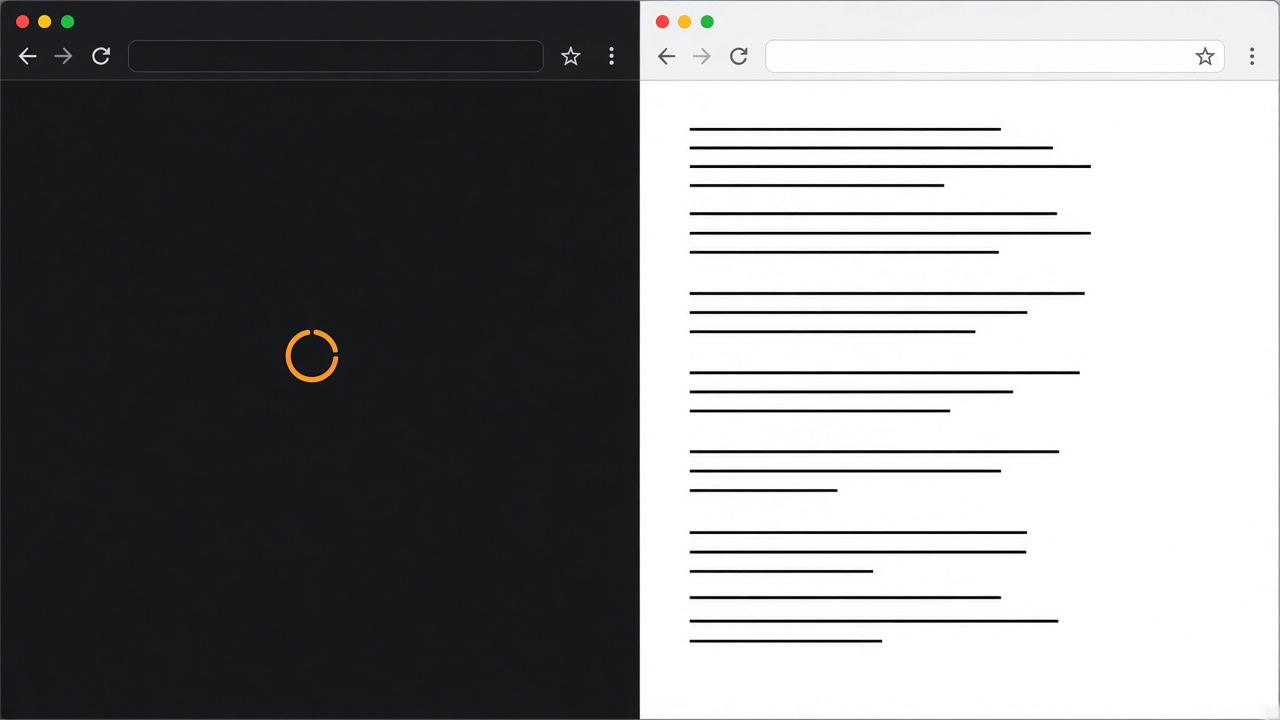
You open the page and the words are there. A crawler that only downloads the HTML may get a shell: a menu, a loading spinner, and almost no sentences. The words were inserted by JavaScript after the file arrived. Anything that does not run that script never reads them.
The raw HTML is the copy that travels
The first response from the server is the raw HTML. It should already contain the H1 and the main paragraphs. Scripts can add a map, a chat widget, or a filter. They should not be the only source of the offer. If you disable JavaScript and the page goes blank, that is the version many simple fetchers see.
This is not the same as a thin page. A thin page has too few words in the text that was measured. A JavaScript-only page can look long in the browser and short in the file. When a page is too thin is the word-count check. This one is about where the words live.
What to move into the HTML
- The H1 and the first screen of real sentences.
- Prices, locations, and the primary call to action as text, not only as a picture.
- Internal links in the HTML, so they can be followed without a script.
- Leave widgets and animations in JavaScript if you want. They are not the article.
A common cause is a site builder that ships an empty div and fills it in the browser. The fix is server-rendered or pre-rendered HTML for the content, not a plugin that pastes keywords into the head. What AI search engines can see is the wider version: they see the HTML you returned, the robots.txt rules, and the schema.
View the page source, not the inspect panel. Source is the file. Inspect is the page after scripts have run.
A quick test is to load the homepage and view source, then search for a sentence you can see on the screen. If that sentence is not in the source, it was added later by a script. Move that sentence, and the heading above it, into the HTML the server sends. You can keep the script for layout. The words have to exist before it runs. Do this for the pages you most want quoted: the homepage and the main offer, not every widget state.
It is scored beside the letter
Content that is missing unless JavaScript runs is worth 20 points inside the AI-search sub-grade. That sub-grade does not change the letter. A fast, well titled site can still hide its words. The points are on the methodology page, and the score guide explains why the two grades stay apart.
The free scan estimates how much text is already in the raw HTML of the homepage. If the number is tiny and the page looks full in your browser, the words are arriving late.