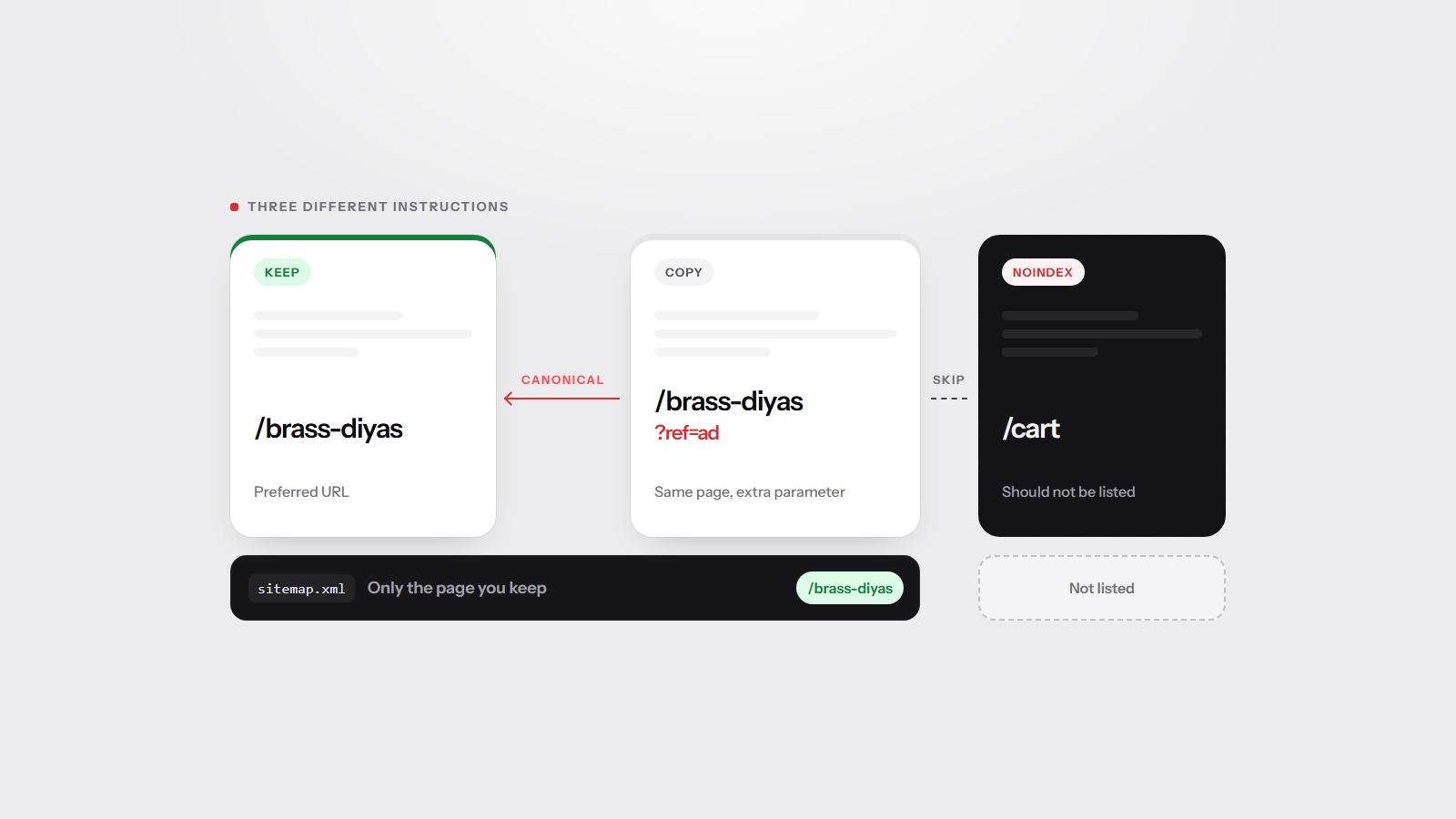
Canonical, noindex, and sitemap solve three different problems. Using the wrong one is how a real page disappears, or how a cart page starts competing with the product it came from. The scan reports all three because they are easy to set once, in a template, and forget.
A canonical picks the URL that should be kept
When the same page answers on more than one address, name the one you want kept. http and https, a trailing slash and no trailing slash, a tracking parameter, or a print view are the usual pairs. The canonical element goes on each copy and points at the preferred URL. Search engines treat the others as duplicates.
Point it at a URL that returns 200 and that is not itself a redirect. A canonical aimed at a staging host, or at a URL that 301s somewhere else, sends the signal into a hole. A missing canonical is a warning in the audit, not a disaster, because many pages are only served at one address. A canonical that points at a different page than the one you are reading is the case to fix first.
noindex is for pages that should not be listed
Use noindex when the page should not appear in search at all. Filtered catalogue URLs, internal search results, cart and checkout steps, thank-you pages, and staging hosts are the normal list. A canonical is the wrong tool here. A canonical says 'index this other URL instead'. noindex says 'index neither'.
- Duplicate product URLs that are the same item: canonical to the one address you share.
- A thank-you page or a cart: noindex. There is no preferred public URL to point at.
- A staging site: disallow the host in robots.txt, and noindex as well, so a linked URL cannot slip in.
- A page you do want found: no canonical pointing elsewhere, and no noindex.
Do not put noindex on a page and also list it as the canonical target of your real pages. You would be telling search engines that the preferred URL is one they should drop.
A sitemap is a list, not a ranking boost
Submitting a sitemap does not make those URLs rank. It asks for them to be discovered. The list should be boring: only URLs that return 200, do not redirect, are not noindex, and declare themselves as the canonical. Every indexable page you care about should be on that list or linked from a page that is.
The audit flags four failures. No sitemap. A sitemap that is empty. URLs in the sitemap that error, redirect, or carry noindex. Indexable pages the crawl found that the sitemap never mentions, when the sitemap was small enough to read in full. A large sitemap index may be only partly read in one scan, and the report says so instead of guessing.
Reference the sitemap from robots.txt with a Sitemap line. A missing robots.txt costs a few points. A robots.txt that blocks the whole site costs many more, and it also stops the sitemap from being useful. If the site is missing from Google entirely, start with that guide before you edit titles.
Titles belong on the pages you keep
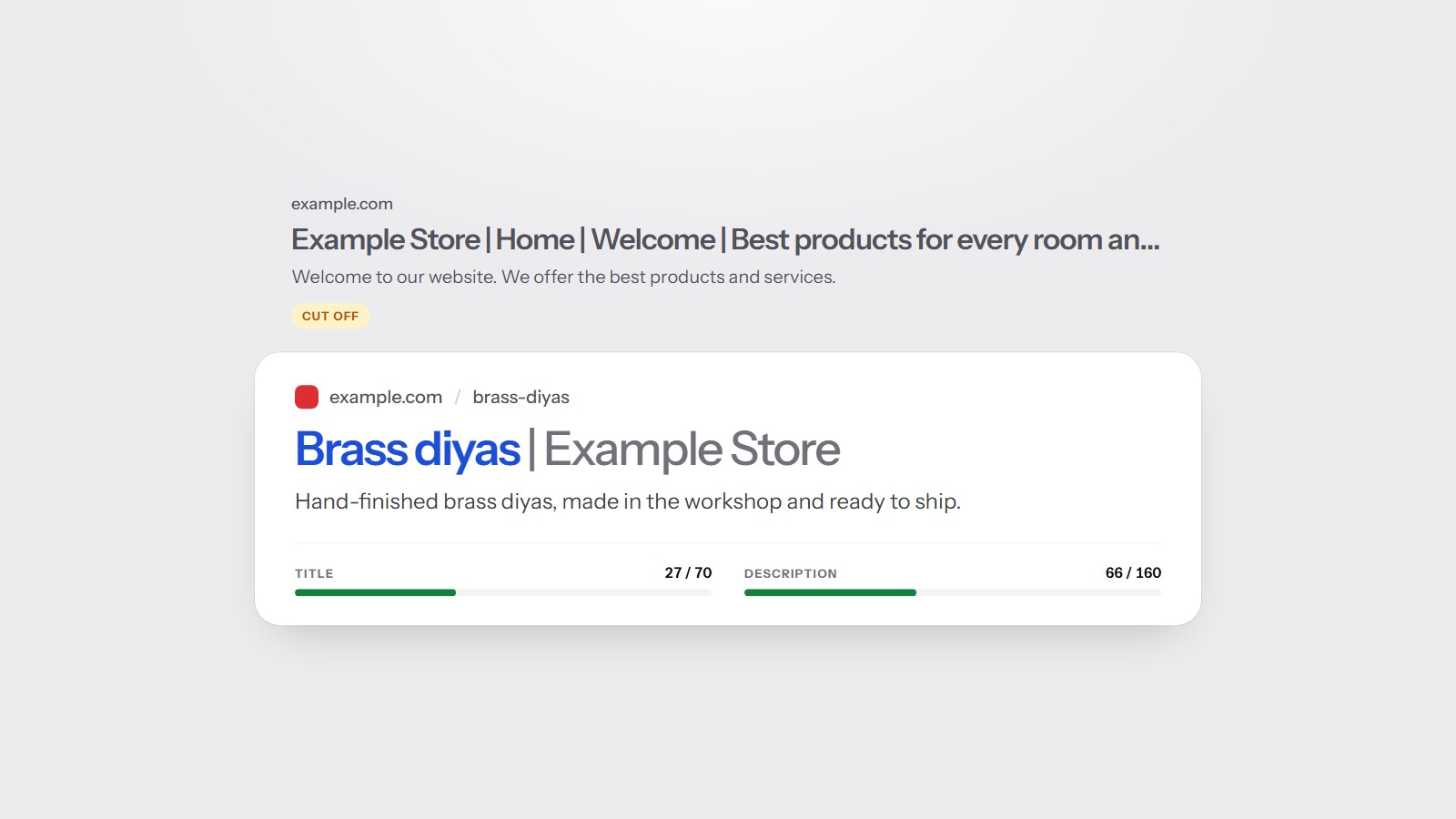
Once the index instructions are right, the pages that remain each need their own title and description. Putting a unique title on a noindex cart page does not help you. Putting one title on every indexable product page hurts you. The length rules, 70 characters for a title and 160 for a description, are in titles and meta descriptions.
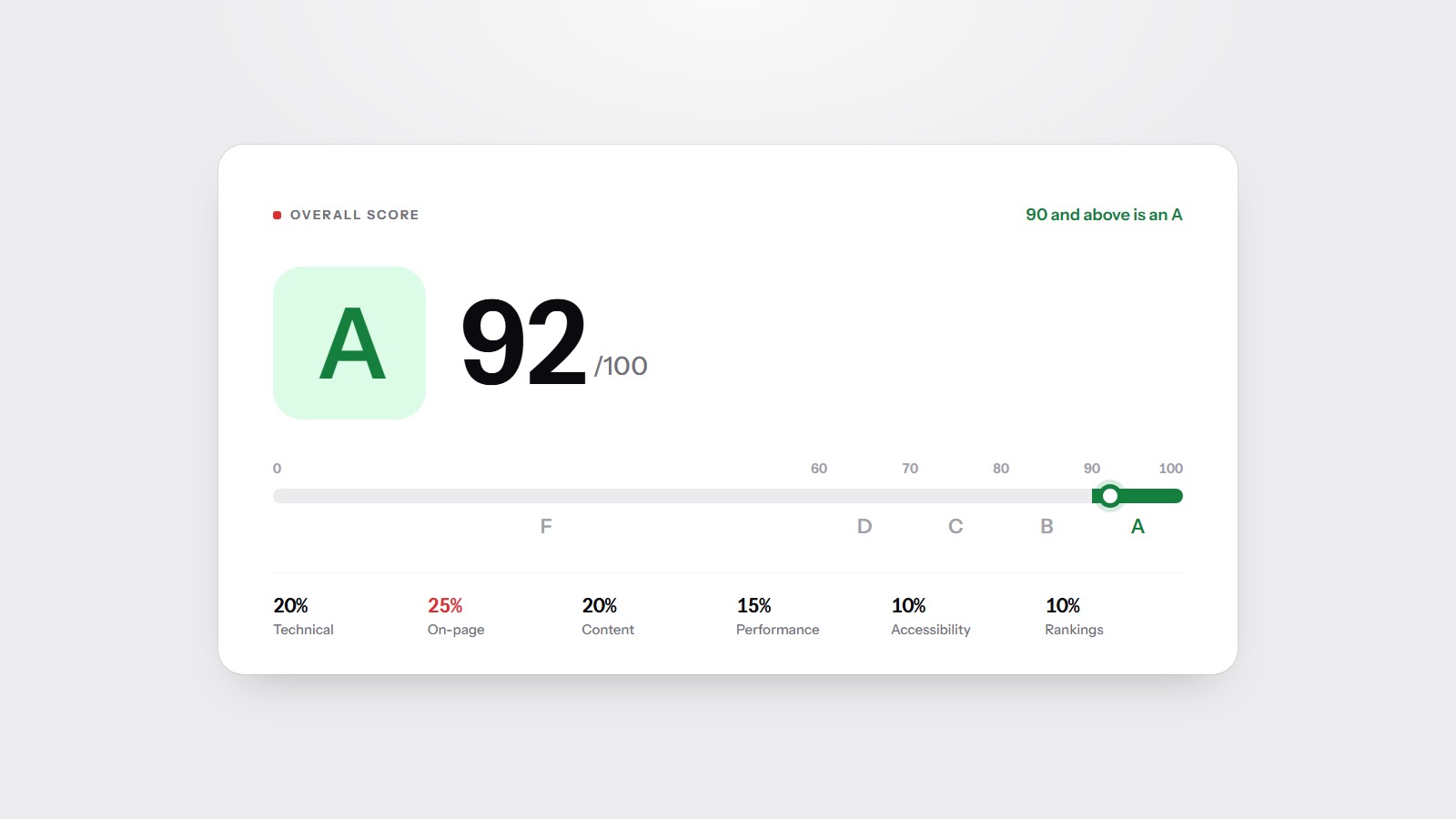
The free scan checks the homepage for a canonical, a noindex, and whether a sitemap was found. A full crawl is what compares the sitemap with the rest of the site. Either way, the letter only moves when a measured check changes, which the score guide spells out. The points for a missing sitemap, a blocked robots.txt, and noindex pages are listed on the methodology page.